
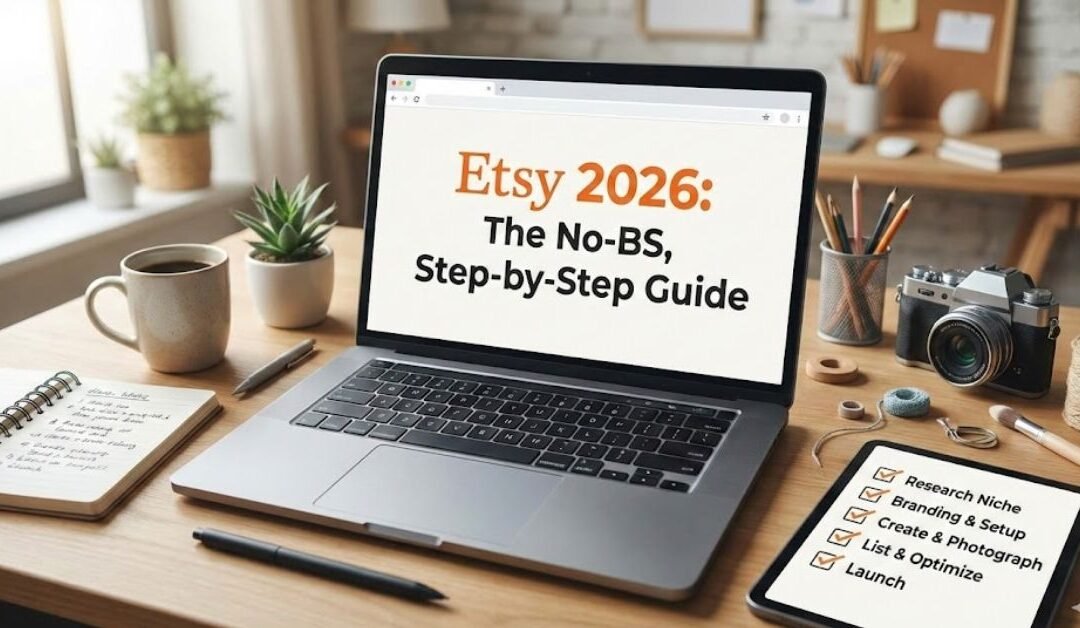
Forget the “get rich quick” stories. Starting a real, sustainable Etsy shop is about marrying your creativity with smart, simple strategy. This guide is your blueprint.
First, Let’s Talk Legitimacy: Is Etsy Worth Your Time?
Before you invest a minute, you need to know: Is Etsy legit? The short answer is yes—but with critical context.
Etsy is a publicly traded company (NASDAQ: ETSY). It’s not a fly-by-night marketplace. Millions of real buyers and sellers use it daily. However, “legit” doesn’t mean “easy money.” It’s a competitive platform with specific rules and fees. Think of it as a massive, global craft fair. You get a stall (your shop), but you still have to make amazing products and learn to attract customers.
Phase 1: The Critical Pre-Launch Work (Don’t Skip This!)
Most people fail because they jump straight to opening a shop. The winners do the homework first.
Step 1: The Million-Dollar Question – What Will You Sell?
Your niche is your foundation. “What to sell on Etsy” isn’t about chasing every trend. It’s about finding the intersection of what you love, what you’re good at, and what people will buy.
| Category | What It Means | Examples |
| Handmade | You create the item yourself. | Jewelry, pottery, knitted scarves, custom art. |
| Vintage | Items that are 20+ years old. | Clothing, furniture, old cameras, records. |
| Craft Supplies | Tools or materials for making. | Beads, fabric, yarn, printable stickers, molds. |
Actionable Insight: Head to Etsy right now. Don’t just browse—research. Search for your product idea. Look at the top-selling listings. Ask yourself:
- How saturated is this market?
- What are the top sellers doing well? (Look at their photos, descriptions, pricing.)
- Can I add a unique twist? (Better materials, personalization, a unique story.)
Step 2: Know the Numbers – Etsy Fees, Decoded
This is where confusion sets in. Let’s clear it up. How much does it cost to sell on Etsy? Here’s the exact breakdown for 2024.
Etsy doesn’t have one “fee.” It has a structure. Every time you sell an item, these fees apply:
- Listing Fee: $0.20. This is paid each time you list an item for sale. It lasts 4 months.
- Transaction Fee: 6.5% of the item’s sale price. If you sell a $30 necklace, Etsy takes $1.95.
- Payment Processing Fee: 3% + $0.25 of the total order (item price + shipping). This covers card processing.
- Optional Fees:
- Etsy Ads: You set your own daily budget for promoted listings.
- Offsite Ads: If a buyer finds you through Etsy’s Google/Facebook ads, you pay a 12-15% fee. This is automatic for established shops but can be turned off for shops under $10k in yearly sales.
Real-World Example: You sell a handmade mug for $28 with $5 shipping.
- Item Price: $28
- Shipping Price: $5
- Total Order: $33
| Fee Type | Calculation | Amount |
| Listing Fee | Flat Fee | $0.20 |
| Transaction Fee | 6.5% of $28 | $1.82 |
| Payment Processing Fee | (3% of $33) + $0.25 | $1.24 |
| Total Fees | $3.26 | |
| Your Earnings | $33 (Total) – $3.26 (Fees) | $29.74 |
Key Takeaway: When you price your item, you must bake these ~12-15% in total fees into your cost. Don’t let them surprise you.
Phase 2: Building Your Shop – The 7-Step Setup
Now for the hands-on part. Log into Etsy.com and follow along.
Step 1: Claim Your Shop Name & Set Billing
Click “Sell on Etsy” and start. Your shop name is your first impression. Make it memorable, readable, and related to what you sell. Have a backup, names get taken.
You’ll immediately add your bank account and a credit/debit card for fees. Etsy needs this to verify you.
Step 2: Craft Your Shop’s Foundation
- Shop Title: Briefly say what you sell. “Handmade Geometric Pottery” is better than “Sarah’s Creative Corner.”
- About Section: This is crucial. Tell your story. Why do you make this? Use a photo of yourself working. People buy from people.
- Shop Policies: Don’t leave these blank. Use Etsy’s templates to set clear rules for returns, exchanges, and shipping. It protects you and builds buyer trust.
Step 3: Create Your First Killer Listing
This is your main sales tool. A good listing does the heavy lifting.
1. Photos Are Everything.
- Use all 10 image slots.
- First photo: Crystal clear, well-lit shot on a clean background.
- Subsequent photos: Show the item in use, detail shots, scale (put it in a hand or next to a coin), and packaging.
2. Title & Tags = Your Search Engine.
- Title: Pack it with keywords a buyer would use. “Personalized Dog Bandana | Custom Pet Necktie | Gift for Dog Lover | Blue Flannel”
- Tags: Use all 13. Be specific. “wedding bouquet” and “dried flower bouquet” are two different tags. Think like a buyer.
3. Description That Sells.
Don’t just list features. Describe the experience and the details.
Bad: “A cotton scarf.”
Good: “Wrap yourself in lightweight, breathable cotton. Hand-dyed with natural indigo for unique variations. Measures 72 inches long, perfect for a cozy loop. Made in my smoke-free studio.”
4. Inventory & Pricing.
Set your SKUs to keep track. For pricing, use this simple formula:
(Cost of Materials + Labor + Overheads) x 2 = Wholesale Price
Wholesale Price x 2 = Retail Price
This builds in your profit and accounts for Etsy’s fees.
Phase 3: You’re Open! Now, How Do You Actually Sell?
Opening the shop is the start. Now you run a business.
Master the Two Traffic Engines
- Etsy SEO: This is how buyers find you inside Etsy. It’s all in your titles, tags, and categories. Tweak them monthly based on Etsy’s “Search Analytics” in your Shop Manager.
- Outside Traffic: Share your listings on Pinterest, Instagram, or TikTok. Don’t just post a link—tell a story. Show the making process.
The Order & Review Cycle
- When you get a sale, celebrate! Then, communicate. Send a thank-you message via Etsy.
- Ship on time, and update the tracking info.
- After delivery, Etsy prompts the buyer to leave a review. You cannot force a review, but you can politely encourage it in your packing slip note: “Hope you love it! If you do, a review helps my small shop tremendously.”
Need to cancel an order? Go to “Shop Manager” > “Orders.” Click “…” next to the order. If the buyer requests it, or you can’t fulfill it, cancel promptly. Refunds are processed automatically.
How does a buyer leave a review? They have a 100-day window after the estimated delivery date. They’ll get an email from Etsy and can leave a 1-5 star rating and a comment. As a seller, you can respond publicly to reviews—always professionally.
Your Next Move
Starting an Etsy shop is equal parts creative joy and logistical puzzle. The dream is real, but it’s powered by practical steps.
Your to-do list is now clear:
- Nail down your product with solid research.
- Understand the fee structure so you profit.
- Build your shop with care—photos and descriptions are key.
- Launch, then learn. Your first sale is the best teacher.
The most successful Etsy sellers aren’t magic. They’re makers who treated their shop like the business it is. You have the creativity. Now you have the map.