
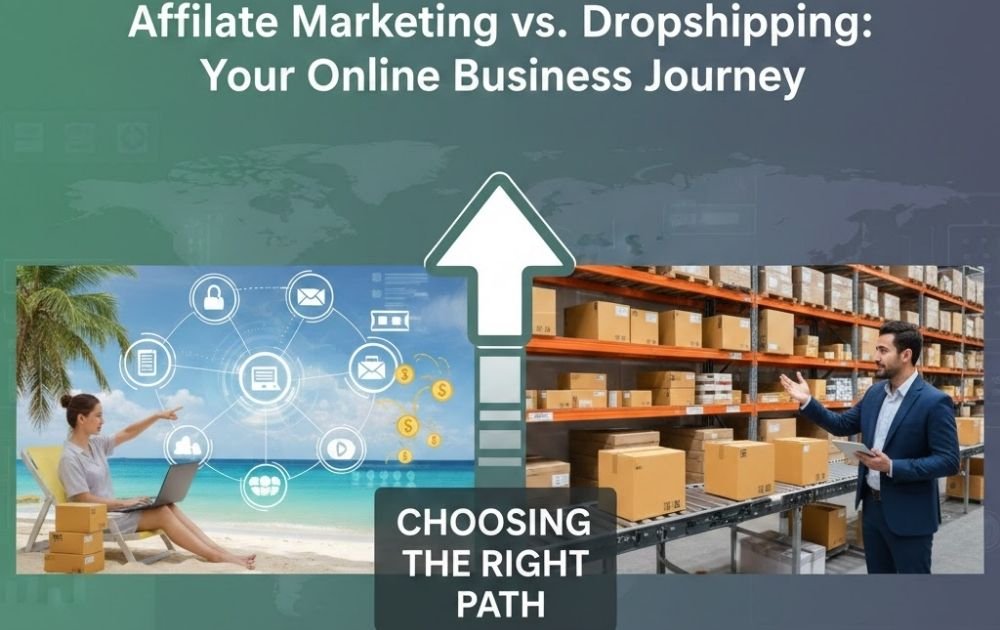
Starting an online business can be exciting but confusing. Many beginners wonder whether affiliate marketing vs dropshipping is the better choice. Both models let you earn money online with low startup costs. Choosing the right path depends on your skills, goals, and effort level.
If you want passive income, affiliate marketing vs dropshipping offers different opportunities. With affiliate marketing, you earn commissions by promoting products. Dropshipping, on the other hand, lets you sell physical products online without keeping inventory. Knowing the difference between dropshipping and affiliate marketing helps make the decision easier.
Marketing plays a key role in success. Dropshipping marketing strategies include social media campaigns and SEO, while dropshipping affiliate marketing can combine selling and promoting products for extra revenue. Understanding these models can help you build a strong, profitable online business.
Affiliate marketing
What is affiliate marketing?
Affiliate marketing is an online business model where you earn money by promoting other companies’ products. With affiliate programs, you share unique links on your website, blog, or social media. This approach lets you generate passive income online without inventory, while focusing on content marketing for affiliates and building trust with your audience.
Affiliate marketing allows beginners to start an online business model with minimal investment. By promoting products through blogs or social media, you can earn commissions online, focus on content marketing for affiliates, and gradually build a reliable online income stream.
Affiliate marketing pros
One major advantage of affiliate marketing is its simplicity. You don’t need inventory or shipping, making it a low-risk online business model. Plus, affiliate programs provide support, helping you earn passive income online while focusing on content marketing for affiliates.
Easy to start
Starting an affiliate marketing business is simple for beginners. You don’t need to create products or manage inventory. By joining affiliate programs, you can quickly promote products online, focus on content marketing for affiliates, and begin earning passive income online.
Moreover, setting up a website or blog is straightforward. Platforms like WordPress make it easy to share content and drive traffic. With basic SEO and social media skills, your online business model can grow, while you learn more about affiliate marketing strategies and building audience trust.
Finally, many affiliate programs offer tutorials and creative tools. This support helps you start faster and avoid common mistakes. By focusing on writing, promoting, and engaging your audience, you can maximize your online income stream with minimal startup costs.
No need to manage customer support
One major benefit of affiliate marketing is that you don’t handle customer support. When someone buys through your affiliate links, the merchant manages inquiries, shipping, and returns. This allows you to focus on content marketing for affiliates and growing your online income stream.
Because you’re not responsible for customer issues, you save time and reduce stress. Instead of handling complaints, you can create helpful blog posts, product reviews, or social media content. This approach strengthens your online business model while maintaining consistent affiliate program earnings.
Additionally, relying on merchants for support allows beginners to learn marketing strategies faster. You can concentrate on driving traffic, improving SEO, and promoting products effectively. Overall, affiliate marketing offers a low-risk path to generate passive income online without operational hassles.
Low startup expenses
Starting affiliate marketing requires very low upfront costs. You don’t need inventory or shipping, and most affiliate programs are free to join. With minimal investment in a website and basic tools, your online business model becomes affordable and low-risk.
Moreover, beginners can rely on free marketing channels like social media, blogs, and SEO. This means you can promote products effectively without spending much money. By focusing on content marketing for affiliates, you gradually build traffic and establish a steady online income stream.
Finally, some affiliate programs even offer sign-up bonuses or creative resources. This extra support reduces initial expenses and accelerates growth. Overall, affiliate marketing is ideal for anyone seeking a low-cost entry into the online business model world.
Earn passive income
One of the biggest advantages of affiliate marketing is the ability to earn passive income online. Once you create content and share affiliate links, it can generate sales over time. This allows your online business model to earn money even when you’re not actively working.
Moreover, quality content like blog posts, reviews, or videos continues to attract visitors long after publishing. By focusing on content marketing for affiliates, you can build a sustainable online income stream. Over time, this creates financial freedom and more flexibility in managing your business.
Finally, as your audience grows, so does your earning potential. Established affiliate programs pay regular commissions, rewarding consistent effort. In this way, affiliate marketing allows beginners to scale income while keeping costs low and enjoying the benefits of passive revenue online.
Affiliate marketing cons
While affiliate marketing offers many benefits, there are some drawbacks. Beginners may face low commissions at the start, limited control over pricing, and reliance on merchants. Additionally, links can be removed, impacting your online income stream, making it essential to choose reliable affiliate programs and focus on strong content marketing for affiliates.
Low commissions at the start
At the beginning, affiliate marketing often offers low commissions, especially for new affiliates. Initially, earnings may feel small, even with strong effort. However, by improving content marketing for affiliates and building audience trust, your online income stream can grow over time.
Moreover, commissions vary by product category and program. Beginners may earn less by promoting low-margin items, while high-value products offer more profit. By focusing on niche-specific affiliate programs, you can gradually increase earnings and make your online business model more profitable.
Finally, patience is key. Even with low initial payouts, consistent effort in creating engaging content and promoting affiliate links helps establish a stable passive income online, proving that starting small can lead to long-term success.
No control over pricing
As an affiliate marketer, you have no control over the pricing of products. Merchants set prices, and changes can impact sales. By focusing on strong content marketing for affiliates, you can still attract buyers and grow your online income stream.
Moreover, pricing shifts may affect conversion rates. If products become too expensive, visitors may hesitate to purchase. Therefore, selecting reliable affiliate programs and promoting items suited to your audience ensures your online business model remains effective.
Additionally, clear communication and honest reviews help maintain trust with readers. Even without pricing control, consistent promotion and engagement enable your passive income online to keep growing steadily.
Affiliate links can be removed
Your affiliate links track sales, but users may remove or block them. This can reduce your online income stream unexpectedly. By using trusted affiliate programs and keeping backups of your content, you minimize potential disruptions.
Moreover, link removal highlights the importance of creating quality content. Engaging articles, blogs, and social media posts keep audiences returning, ensuring your content marketing for affiliates remains effective and profitable despite occasional link issues.
Finally, diversifying income through multiple affiliate programs reduces risk. Even if one link stops tracking, other sources continue generating revenue, allowing your online business model to remain stable and maintain passive income online.
Limited to some advertising
SomSome advertising platforms restrict affiliate marketing, limiting paid promotions. For example, Google Ads may not allow certain affiliate links, making organic strategies and content marketing for affiliates essential for building your online income stream.
Additionally, relying solely on limited paid channels encourages creativity. Social media, email newsletters, and blogs can attract visitors effectively. By exploring diverse methods, your online business model remains adaptable and resilient.
Finally, combining multiple promotion strategies strengthens results. Even with advertising restrictions, consistent effort in creating valuable content ensures your affiliate programs perform well, allowing steady growth of passive income online.
Dropshipping
What is dropshipping?
Dropshipping is an ecommerce business model where you sell products online without keeping inventory. Instead, suppliers handle storage, shipping, and fulfillment. This low-risk model allows you to focus on dropshipping marketing, building your brand, and generating revenue efficiently.
Moreover, dropshipping offers flexibility for beginners and experienced sellers alike. By selecting reliable suppliers and trending products, you can grow your online business model. Combining smart dropshipping affiliate marketing strategies can also boost sales and create multiple income streams while reducing operational hassle.
Dropshipping pros
One major advantage of dropshipping is that you can build your own brand and sell products online without holding inventory. By focusing on dropshipping marketing and selecting trending items, you increase profit margins. Additionally, combining dropshipping affiliate marketing strategies can boost your online business model and generate multiple income streams.
Build your own brand
One major benefit of dropshipping is that you can create and promote your own brand. Unlike affiliate marketing, you control product selection, descriptions, and customer experience. By combining dropshipping marketing strategies, your online business model becomes unique and memorable.
Moreover, branding builds trust with customers. High-quality products and consistent branding increase loyalty, helping your store stand out. Leveraging dropshipping affiliate marketing allows you to promote complementary products and further strengthen your online income stream.
Finally, owning your brand gives long-term benefits. You can expand your product line, adjust strategies, and scale globally. This flexibility makes dropshipping an ideal online business model for entrepreneurs seeking independence and growth.
Higher profit margins
Dropshipping often provides higher profit margins compared to affiliate marketing. You set product prices, manage offers, and reduce middleman costs. Smart dropshipping marketing and niche selection can maximize profits while growing your online business model efficiently.
Additionally, selecting trending or high-value products boosts revenue potential. By analyzing customer preferences and demand, your dropshipping affiliate marketing strategies can increase sales and strengthen your online income stream over time.
Finally, proper pricing and quality products help differentiate your store. By maintaining value and avoiding unnecessary discounts, your dropshipping business can achieve sustainable profits and long-term growth in the online business model space.
Instant payment
A key advantage of dropshipping is receiving instant payment from customers. Unlike affiliate marketing, where commissions may take weeks to process, dropshipping provides immediate cash flow, enabling faster reinvestment in dropshipping marketing and expanding your online business model.
Moreover, payment flexibility improves business efficiency. Platforms like Shopify and PayPal allow multiple payment options, helping international customers purchase easily. This strengthens your dropshipping affiliate marketing opportunities and ensures a steady online income stream.
Finally, instant payments help manage operations effectively. You can cover marketing, supplier costs, and expansion quickly. By leveraging fast cash flow, your dropshipping business remains competitive and scalable while maintaining a strong online business model.
Easy to scale
Dropshipping is highly scalable, allowing you to grow your store quickly. By adding new products, targeting different customer segments, and using dropshipping marketing, your online business model can expand globally without heavy investment.
Moreover, you can automate processes like order fulfillment and customer service. This enables entrepreneurs to focus on growth strategies and optimize dropshipping affiliate marketing, creating multiple revenue streams while maintaining a steady online income stream.
Finally, scalability ensures long-term potential. With the right niche, branding, and marketing strategies, dropshipping allows you to reach more customers, increase sales, and establish a sustainable online business model for future success.
Dropshipping cons
Although dropshipping offers many benefits, it also has challenges. You must handle customer support and rely on suppliers for fulfillment, which can affect quality. Additionally, price competition is common, requiring smart dropshipping marketing and strategic dropshipping affiliate marketing to maintain your online business model and protect your online income stream.
Customer support needed
Running a dropshipping business requires handling customer support, unlike affiliate marketing. Customers contact you with questions, concerns, or returns, so you must respond quickly. By focusing on dropshipping marketing and organized communication, your online business model can maintain trust and a strong online income stream.
Moreover, providing excellent support improves customer satisfaction and loyalty. Outsourcing tasks or using virtual assistants can help manage workload. Integrating dropshipping affiliate marketing tools allows you to track orders efficiently and respond faster, enhancing your online business model performance.
Finally, consistent communication strengthens your brand reputation. By solving issues promptly, your dropshipping store builds credibility, encourages repeat purchases, and grows a stable online income stream, even while scaling your business globally.
Limited control over the quality of service
With dropshipping, suppliers handle fulfillment, so you have limited control over service quality. Mistakes, delays, or damaged products can affect your online business model. Careful supplier selection and effective dropshipping marketing help maintain a strong online income stream.
Additionally, testing products before selling ensures customers receive high-quality items. This proactive approach supports your dropshipping affiliate marketing strategy and builds trust, helping your store remain competitive and retain long-term customers.
Finally, monitoring supplier performance and reading reviews reduces risks. Even with limited control, prioritizing reliable suppliers allows your dropshipping store to provide consistent service while growing your online income stream.
Price competition with other businesses
Dropshipping is popular, so price competition is common. Many sellers offer similar products, which can lower profit margins. Smart dropshipping marketing and strategic pricing help your online business model stay competitive and maintain a strong online income stream.
Moreover, differentiating your brand through unique products, quality service, or niche selection reduces direct competition. Combining dropshipping affiliate marketing with promotions and content strategies boosts visibility and sales, even in crowded markets.
Finally, balancing competitive pricing with profitability is key. By emphasizing value and customer experience, your dropshipping store can thrive despite competition and sustain a long-term online income stream.
Affiliate marketing vs. dropshipping: How do they compare?
When comparing affiliate marketing vs dropshipping, both offer low startup costs but differ in responsibilities. Affiliate marketing focuses on promoting products for passive income online, while dropshipping requires managing orders, suppliers, and dropshipping marketing. Understanding the difference between dropshipping and affiliate marketing helps choose the right online business model.
Ease of start
Starting affiliate marketing is easy for beginners because it doesn’t require inventory or shipping. You can join affiliate programs and begin promoting products immediately. In contrast, dropshipping needs a store setup and supplier research, but both models offer low-risk online business model options.
Moreover, you can start affiliate marketing using a blog, social media, or email campaigns. Platforms like WordPress make setup simple. For dropshipping, platforms like Shopify or WooCommerce help you launch a professional store quickly, making either option accessible for beginners entering online business models.
Additionally, quick setup allows you to test ideas and learn strategies. Beginners can focus on content marketing for affiliates or dropshipping marketing without heavy initial investment. Both paths provide practical experience while building a scalable online income stream.
Finally, flexibility is a major advantage. You can experiment with niches, products, or affiliate programs and refine your approach. Choosing between affiliate marketing vs dropshipping depends on your comfort with hands-on management versus content creation in your online business model.
Skillset needed
Affiliate marketing primarily requires strong writing and marketing skills. Creating engaging content, optimizing for SEO, and sharing on social media helps you earn passive income online. Skills in content marketing for affiliates make your online business model successful.
In contrast, dropshipping demands broader skills. You need marketing, product research, customer service, and basic web management. Combining dropshipping marketing and dropshipping affiliate marketing strategies helps you attract customers while ensuring your online business model runs smoothly.
Moreover, understanding your target audience is critical. Both affiliate marketing and dropshipping require learning customer preferences, trends, and behavior. Applying this knowledge strengthens your online income stream and improves overall performance in any online business model.
Finally, adaptability is key. In affiliate marketing vs dropshipping, staying up-to-date with trends, new platforms, and tools ensures growth. Developing both marketing and operational skills helps maintain a competitive and profitable online business model.
Investment needed
Affiliate marketing requires minimal investment. Mainly, you spend on domain registration, hosting, and basic marketing tools. Using free traffic methods like SEO and social media allows your online business model to start generating passive income online quickly.
Meanwhile, dropshipping needs more upfront investment. You must create a store, cover domain and hosting costs, and budget for dropshipping marketing campaigns. Choosing reliable suppliers is crucial for a strong online business model and steady online income stream.
Moreover, both models allow flexibility in spending. Beginners can start small, then scale their affiliate marketing or dropshipping affiliate marketing efforts over time. Strategic budgeting improves efficiency and maximizes returns for your online business model.
Finally, low startup costs make both paths accessible. Whether you focus on affiliate programs or selling physical products, careful planning ensures a profitable online income stream while minimizing financial risk in your online business model.
Earning potential
Affiliate marketing offers substantial earning potential when done strategically. Building quality content and trust with your audience increases commissions. Effective content marketing for affiliates ensures your online income stream grows steadily over time within a scalable online business model.
In dropshipping, your profits depend on product selection, pricing, and customer service. High-demand products with smart dropshipping marketing can yield strong margins. Combining dropshipping affiliate marketing can further boost your online business model earnings.
Moreover, both models benefit from niche selection and trend awareness. Targeting the right audience ensures your online income stream is maximized. Consistent effort and optimization enhance long-term growth in affiliate marketing vs dropshipping ventures.
Finally, passive income is a unique advantage of affiliate marketing, while dropshipping allows higher active profits. Choosing your path depends on whether you prefer content-based online income streams or hands-on selling in your online business model.
Which one is best for you?
Choosing between affiliate marketing vs dropshipping depends on your goals and preferences. If you enjoy creating content and earning passive income online, affiliate marketing is ideal. Meanwhile, dropshipping suits those who want more control over products, branding, and dropshipping marketing.
Moreover, consider your skills and time. Affiliate marketing requires strong writing and SEO skills for content marketing for affiliates, while dropshipping demands customer service, product research, and dropshipping affiliate marketing strategies. Matching your strengths ensures a successful online business model.
Finally, budget and risk tolerance matter. Affiliate marketing has low startup costs and minimal operational responsibility, whereas dropshipping requires more investment but offers higher potential profits. Evaluate your priorities to choose the right online business model and maximize your online income stream.
Conclusion
In conclusion, both affiliate marketing and dropshipping offer unique opportunities to build a successful online business model. Affiliate marketing is perfect for beginners seeking low startup costs, simple setup, and passive income online through effective content marketing for affiliates.
On the other hand, dropshipping allows more control over products, branding, and dropshipping marketing, providing higher profit potential if managed well. Ultimately, your choice depends on skills, interests, and resources. By understanding the difference between dropshipping and affiliate marketing, leveraging dropshipping affiliate marketing, and focusing on growth strategies, you can create a profitable, sustainable online income stream.
Frequently Asked Questions
What is the difference between dropshipping and affiliate marketing?
Affiliate marketing earns commissions by promoting products, while dropshipping sells physical products online. Both require marketing skills, but dropshipping involves handling orders, suppliers, and dropshipping marketing.
Which one is easier to start: affiliate marketing or dropshipping?
Affiliate marketing is easier for beginners. You don’t manage inventory or customer support, making it ideal for building passive income online and testing your online business model.
Do I need special skills for dropshipping?
Yes, dropshipping requires product research, marketing, customer support, and website management. Combining dropshipping affiliate marketing strategies ensures a profitable and scalable online business model.
Can I earn passive income with dropshipping?
Dropshipping can generate some income passively, but most profits require active work on dropshipping marketing. Affiliate marketing is better for true passive income online.
Which business model is more profitable long-term?
Both models are profitable, but dropshipping offers higher active profit potential, while affiliate marketing provides long-term passive income online using effective content marketing for affiliates.